Supported Species
Explore the lady beetle species that can be identified by the AI classification system.
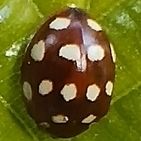
Calvia Quatuordecimguttata
A cream-spotted ladybird commonly found in forests, shrubs, and woodland habitats across Europe and Asia.
Europe, North America, and Asia
Forests, shrubs, and woodland vegetation
4–5.5 mm
Description
Calvia quatuordecimguttata is a medium-sized ladybird distinguished by fourteen cream-colored spots on a maroon-brown body. Although the European form is the most common, this species exhibits several color variations in North America and parts of Asia. It inhabits forests, shrubs, and wooded areas where it actively preys on aphids and other small insects. Its glossy pronotum and distinctive abdominal coloration make it relatively easy to recognize among other ladybird beetles.
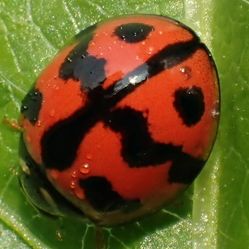
Cheilomenes Sexmaculata
A colorful ladybird widely distributed in tropical regions and frequently observed in agricultural landscapes.
Asia, Australia, Caribbean, and South America
Agricultural fields, gardens, and grasslands
5–8 mm
Description
Cheilomenes sexmaculata is a widely distributed ladybird species found throughout tropical and subtropical regions of Asia. It exhibits several color morphs, making its appearance highly variable and sometimes difficult to distinguish from similar species. This beetle is well known as an effective natural predator of aphids and other soft-bodied insects, making it an important biological control agent in agriculture. It has also been introduced into several regions outside its native range for pest management.
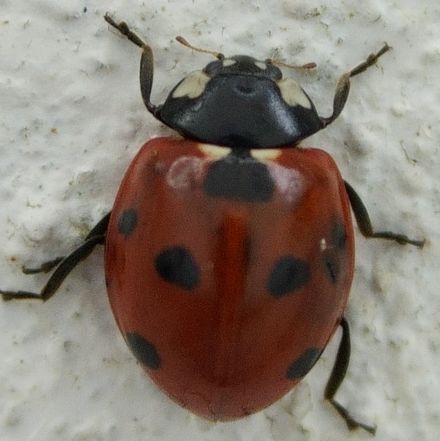
Coccinella Septempunctata
The famous seven-spotted ladybird commonly inhabiting grasslands, forests, gardens, and agricultural ecosystems worldwide.
Europe, Asia, North America, and North Africa
Grasslands, farmlands, forests, and gardens
6.5–7.8 mm
Description
Coccinella septempunctata, commonly known as the seven-spotted ladybird, is one of the most recognizable ladybird species in the world. It has orange-red wing covers with seven distinctive black spots and a black pronotum marked by two white patches. This species is commonly found in agricultural fields, grasslands, and gardens where it feeds primarily on aphids. Due to its effectiveness in reducing pest populations, it is widely regarded as an important beneficial insect.
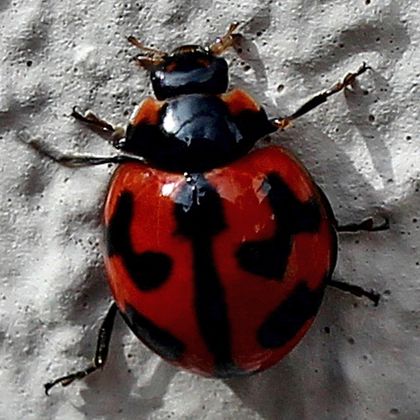
Coccinella Transversalis
A brightly colored ladybird recognized by its distinctive transverse black bands across the red wing covers.
India, Southeast Asia, Malesia, and Australia
Agricultural fields, grasslands, and forests
5–7 mm
Description
Coccinella transversalis is a ladybird species distributed across South Asia, Southeast Asia, and Australia. It is recognized by its characteristic transverse markings on the wing covers and has long been studied due to its effectiveness as a natural predator. The species commonly inhabits agricultural ecosystems where it feeds on aphids and other small insect pests. Its wide geographical distribution reflects its adaptability to various environmental conditions.
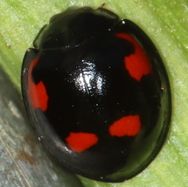
Exochomus Quadripustulatus
A small black ladybird with four reddish spots commonly inhabiting forests, shrubs, and deciduous trees.
Europe, Asia, and North Africa
Pine forests and coniferous woodlands
4–6 mm
Description
Exochomus quadripustulatus, commonly called the pine ladybird, is a small, rounded ladybird commonly associated with coniferous trees. It usually has a shiny black body with four red, orange, or yellow spots, although the coloration may vary with age. This species is an important predator of aphids and scale insects found on pine trees and other conifers. Its distinctive appearance makes it relatively easy to identify among black-colored ladybird beetles.
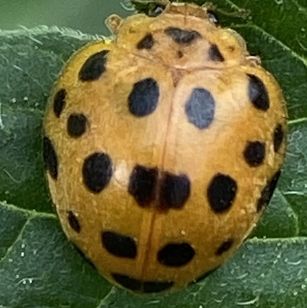
Henosepilachna Vigintioctopunctata
A phytophagous ladybird recognized by numerous black spots feeding mainly on solanaceous crop plants.
Asia and Australia
Agricultural fields and vegetable plantations
6–8 mm
Description
Henosepilachna vigintioctopunctata, commonly known as the 28-spotted potato ladybird, differs from many other ladybird species because it feeds on plant leaves rather than insects. It is considered an agricultural pest that attacks potatoes, eggplants, tomatoes, and other plants in the Solanaceae family. Adults have numerous black spots covering their yellowish-brown wing covers, making them easy to distinguish. This species is widely distributed throughout tropical and subtropical regions of Asia.
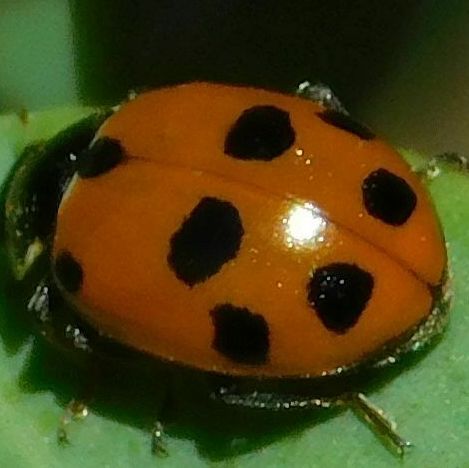
Hippodamia Variegata
A variable-colored ladybird commonly associated with crop fields, grasslands, and natural vegetation habitats.
Europe, Asia, Africa, and North America
Grasslands, agricultural fields, and gardens
3–5.5 mm
Description
Hippodamia variegata, commonly known as the Adonis ladybird, is a small and elongated ladybird widely distributed across Europe, Asia, Africa, and Australia. Its orange or red wing covers display a highly variable number of black spots, making each individual slightly different in appearance. This species is an efficient predator of aphids and other soft-bodied insects, contributing significantly to natural pest control in agricultural ecosystems. It is commonly found in grasslands, crop fields, and gardens.
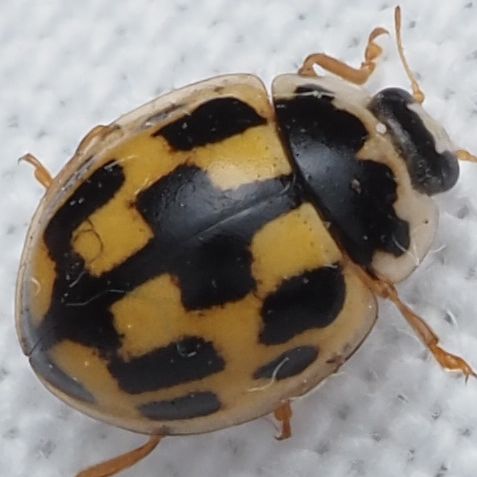
Propylea Quatuordecimpunctata
A yellow ladybird displaying fourteen black spots commonly found throughout grasslands and cultivated agricultural fields.
Europe, Asia, and North America
Agricultural fields, grasslands, and shrubs
3.5–4.5 mm
Description
Propylea quatuordecimpunctata, often called the 14-spotted ladybird, is a small ladybird species recognized by its yellow to cream-colored body with black rectangular markings. The arrangement of these markings is highly variable, resulting in more than one hundred known color patterns. This species is commonly found in agricultural fields and grasslands where it feeds on aphids and other small insect pests. Its remarkable variation makes it one of the most visually diverse ladybird species.
Psyllobora Vigintimaculata
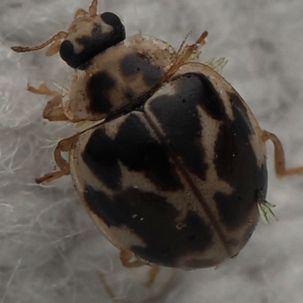
A tiny pale ladybird feeding primarily on powdery mildew fungi growing on leaves and stems.
North America
Forests, shrubs, and gardens
1.75–3 mm
Description
Psyllobora vigintimaculata, commonly known as the twenty-spotted lady beetle, is a small North American species that differs from most ladybirds because it primarily feeds on fungi such as powdery mildew. It has a pale white body decorated with numerous orange or dark spots, making it easily distinguishable from predatory ladybird species. This beetle contributes to plant health by reducing fungal growth on leaves rather than controlling insect pests. It is commonly found on trees, shrubs, and herbaceous plants.
Tytthaspis Sedecimpunctata
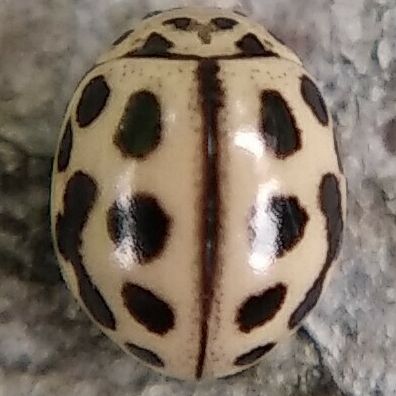
A pale cream-colored ladybird distinguished by sixteen black spots inhabiting open grassland and meadow environments.
Europe, North Africa, Asia, and Western China
Grasslands, dry meadows, dunes, and marshy fields
2–3 mm
Description
Tytthaspis sedecimpunctata, commonly known as the sixteen-spotted ladybird, is a small ladybird widely distributed across Europe, North Africa, and parts of Asia. It typically has a cream or beige body with sixteen dark spots, many of which may merge into elongated markings. Unlike many ladybird species, it feeds on aphids as well as pollen, fungi, mites, and other small organisms. During winter, large numbers of individuals often gather together on tree trunks, wooden posts, and other sheltered surfaces.